MyME


Fall in Minnesota is rarely just a few weeks of crisp air and dry, crunchy leaves. More often than not, homeowners and land managers deal with cold rain, early snow, and layers of matted, wet foliage that standard big-box store tools simply cannot handle. When the weather turns and the debris gets heavy, you need equipment with high torque, strong suction, and durability to clear your land effectively.
High-Output Blowers for Wet Debris
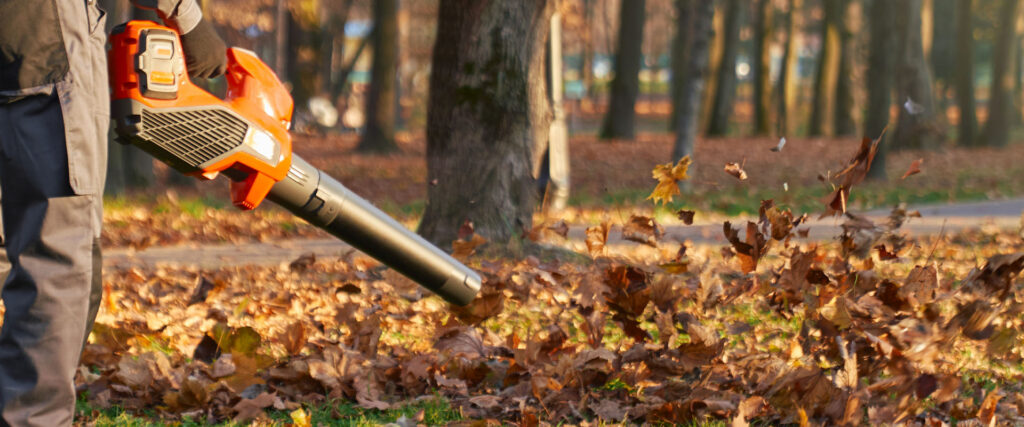
The first line of defense against heavy, wet leaves is a blower that prioritizes Newton force and air volume (CFM) over just air speed (MPH). While a handheld unit might work for dry sidewalks, moving a sodden mat of oak leaves from a lawn requires a backpack blower with significant scouring power.
We recommend the Stihl BR 800 C-E Magnum for this exact application. It is one of the most powerful backpack blowers on the market and offers the “grunt” needed to lift wet leaves that are stuck to the turf. The key here is the blowing force at the nozzle. A blower like the BR 800 provides enough pressure to peel up matted layers that lesser machines would just blow over. For larger properties, this reduces the time you spend out in the cold and prevents the need for raking.
Tractor Attachments for Heavy Cleanup
If you maintain acreage with a compact utility tractor or a high-end zero-turn mower, you can leverage the engine power you already have. However, not all attachments are built for wet conditions. Standard bagging systems often clog when the moisture content is high because the deck airflow alone is not enough to push heavy material up the chute.
To manage heavy debris without constant clogging, look for these specific features and attachments:
- Active Material Collection Systems (MCS): Unlike passive baggers, a system like the John Deere Power Flow utilizes a fan assist mounted on the mower deck. This fan actively accelerates debris up the chute and into the hopper. It is essential for wet grass and leaves that would otherwise plug a standard tube.
- Loader Buckets and Grapples: For storm debris, fallen branches, or piles of wet material that are too heavy to blow, a front-end loader is indispensable. A grapple bucket attachment allows you to clamp down on irregular piles of brush and move them easily without manual lifting.
- Mulching Kits with High-Lift Blades: If you choose to mulch rather than collect, ensure you are using high-lift blades. These generate maximum airflow under the deck, standing the grass and leaves up to be cut multiple times. This prevents the “pancaking” effect where wet leaves are simply pressed into the mud.
When to Mulch and When to Remove
There is a limit to what even the best mulching deck can handle when moisture is involved. Mulching is a fantastic option for early fall when leaf cover is light to moderate and the ground is relatively firm. It returns nutrients to the soil and saves you the hassle of disposal.
However, once the leaves become thick and wet, mulching can sometimes do more harm than good by smothering the grass and creating conditions for snow mold. In these scenarios, removal is the better option for turf health. Using a high-powered vacuum system or a blower to clear the bulk of the material allows your grass to breathe during the winter months. For heavy, wet snowfalls that come early, having a clean lawn prevents ice sheets from forming over debris, which can tear up your turf come spring.
Get Your Property Ready for Winter
Managing land in Minnesota requires anticipating the worst weather rather than hoping for the best. Whether you need to upgrade your handheld equipment or fit your tractor with a heavy-duty collection system, having the right tools makes the difference between a clean lawn and a spring headache. Our team understands local conditions and can help you find the machine that matches your acreage and terrain.