MyME

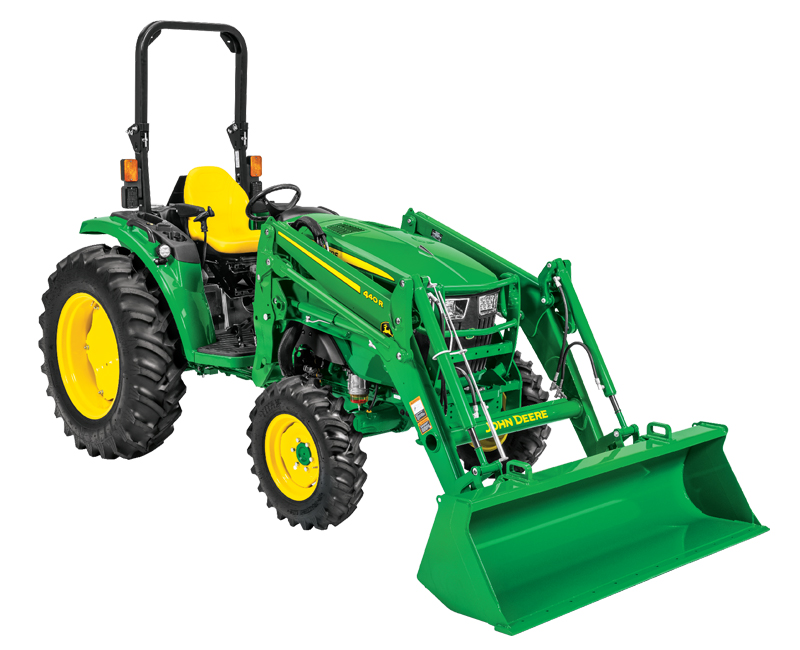
Investing in high-quality machinery like a John Deere compact tractor or a Toro zero-turn mower changes how you manage your property. You gain efficiency and power. However, moving that equipment between properties or to the shop requires the right transport solution. A trailer that is too small poses safety risks, while a trailer that is too large can be cumbersome and unnecessary. Finding the correct match involves understanding your specific hauling needs and the specifications of your equipment.
Determine Your Payload Requirements
The most critical factor in choosing a trailer is weight capacity. Many buyers look at the Gross Vehicle Weight Rating (GVWR) and assume that number equals the load they can carry. This is a common mistake. The GVWR represents the total weight of the trailer plus its cargo. To find your actual payload capacity, you must subtract the weight of the empty trailer from the GVWR.
Calculate the total weight of your equipment to get an accurate number. Include the base weight of the machine, as well as the weight of any fluids or attachments. A compact tractor with a loader and a backhoe weighs significantly more than the tractor alone. Always leave a comfortable margin for safety. A trailer maxed out to its limit will wear down faster and handle poorly on Minnesota roads.
Select the Right Deck Dimensions
Your equipment needs to fit comfortably on the trailer deck with room for proper tie-downs. Measure the width of your machine at its widest point. For zero-turn mowers, this is usually the mower deck. For tractors, measure the rear tires. The trailer deck must be wider than your machine to load safely.
Length is equally important. Account for the full length of your setup. If you haul a compact tractor with a brush cutter or a front-end loader, the overall length increases dramatically. A 16-foot or 18-foot trailer often serves compact tractor owners better than a 12-foot model because it accommodates these implements. Consider these factors when measuring for length:
- Machine Length: Measure from the furthest front point to the furthest rear point.
- Implement Overhang: Loaders and cutters add several feet.
- Balance: You need room to shift the machine forward or backward to achieve proper tongue weight (usually 10-15% of the total load).
Ramp Style and Loading Angle
Loading low-clearance equipment like a zero-turn mower requires a different approach than loading a high-clearance utility tractor. Mower decks sit low to the ground. If the ramp angle is too steep, the mower deck will catch on the transition point between the ramp and the trailer bed. This is often called high-centering.
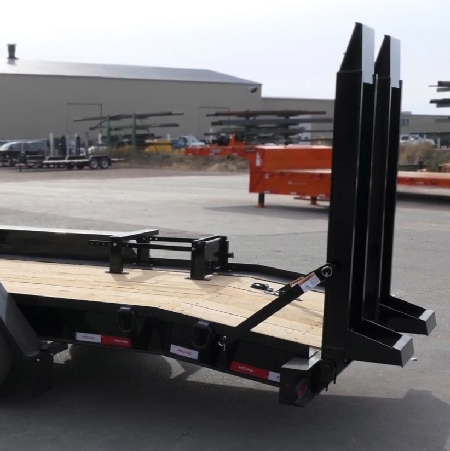
A dovetail deck (where the rear of the trailer slopes down) or a longer gate reduces the loading angle. This helps mowers climb aboard without scraping. Heavy-duty equipment often utilizes slide-in ramps or stand-up ramps. These are extremely durable but require physical effort to move. Full-width landscape gates offer the easiest loading for mowers but create significant wind drag when towing empty. Choose the ramp style that matches your physical capabilities and the ground clearance of your machine.
Single Axle vs. Tandem Axle
Stability matters when hauling heavy loads at highway speeds. A single-axle trailer is generally sufficient for lighter loads, such as a single zero-turn mower or a small ATV. These trailers are easier to maneuver by hand when disconnected from the truck.
Tandem-axle trailers use two axles. This configuration offers better stability, less bounce, and higher weight capacities. If you plan to haul a compact utility tractor or multiple pieces of equipment, a tandem axle is the safer choice. They track better behind the tow vehicle and offer a safety buffer if one tire fails.
Find Your Hauling Solution
Safely transporting your equipment protects your investment and keeps you safe on the road. The team at Minnesota Equipment understands the specific weight and dimension requirements of the machinery we sell. We can help you match your tractor or mower to a trailer that fits your needs and keeps you legal on the road.