
 MyME
MyME

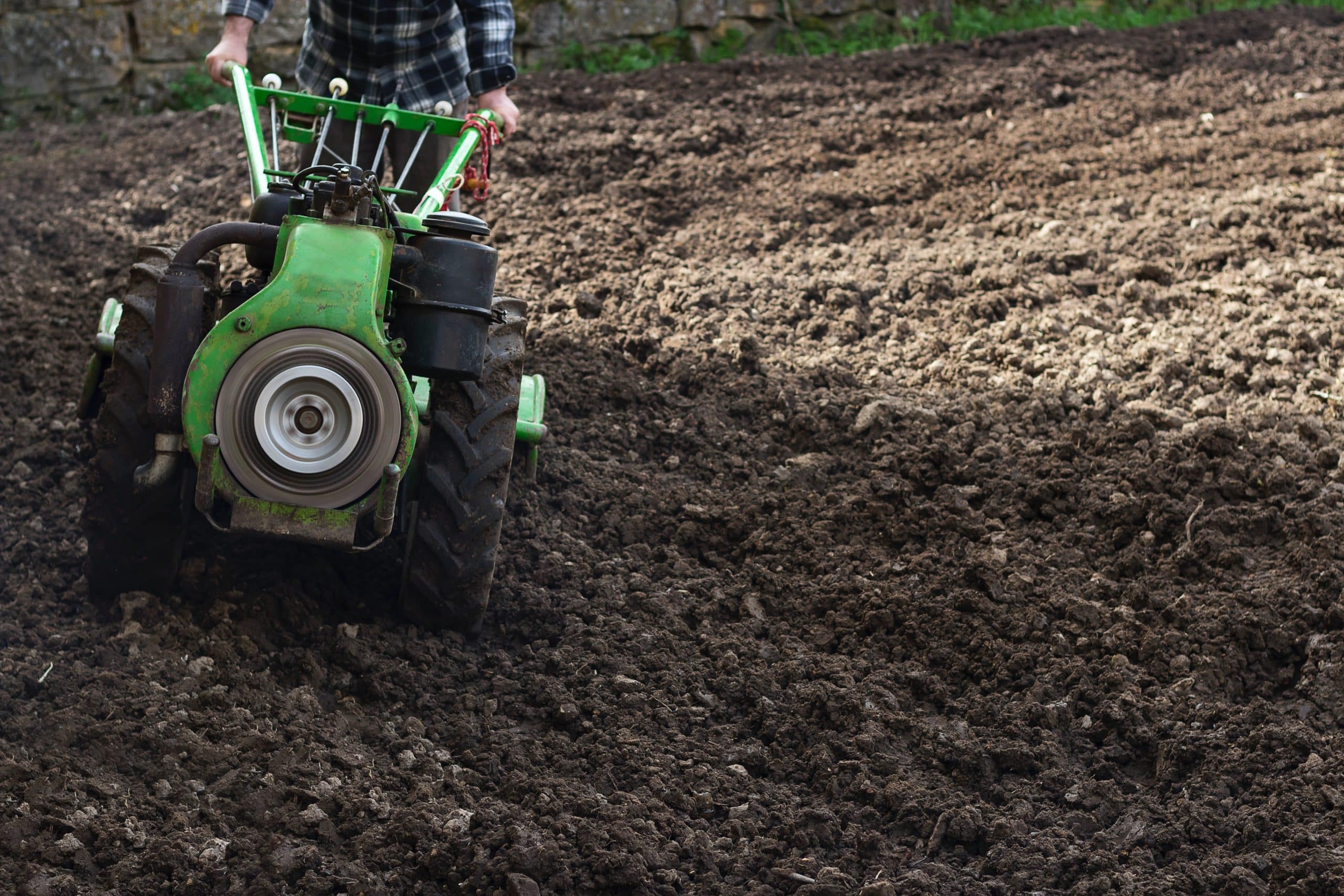
Your lawn used to bounce back after mowing. Now you see ruts. Water pools where it used to soak in. Grass grows thin in the spots you drive over most. You’re doing the same maintenance you’ve always done, but the results keep getting worse.
The problem isn’t your grass—it’s what’s happening underneath. Soil compaction is the silent damage that accumulates every time heavy equipment presses soil particles together, squeezing out the air and water spaces roots need to thrive. And once it starts, it compounds.
What Compaction Actually Does
Healthy soil has tiny pockets between particles—space for air, water, and roots. When equipment weight compresses those spaces, soil becomes dense and hard. Water can’t infiltrate, so it runs off or puddles. Roots can’t penetrate, so they grow sideways or stunted.
Clay-heavy Midwest soils are especially vulnerable. They compact easily and stay compacted. The ground feels like concrete. And year after year, the problem worsens because compacted soil can’t recover on its own.
How Your Equipment Contributes
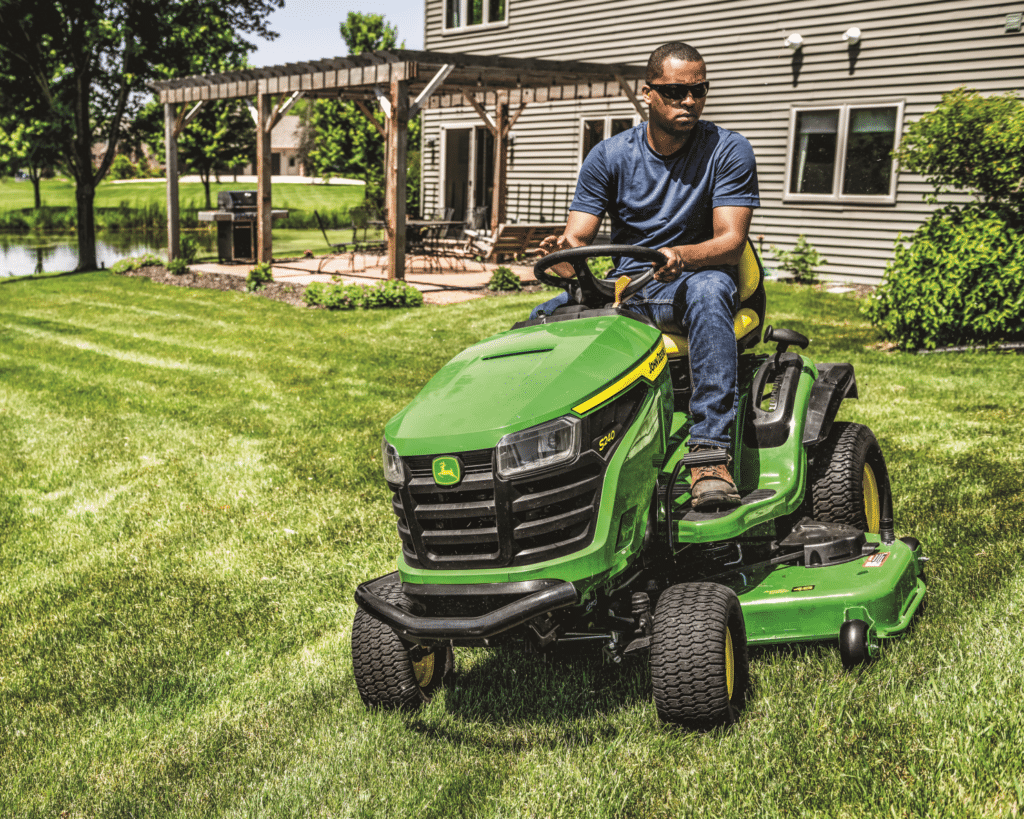
Every pass with a riding mower, tractor, or UTV applies hundreds of pounds of pressure. The heavier the machine and narrower the tires, the more concentrated that pressure becomes. Repeated traffic over the same paths creates hardpan layers roots cannot break through.
The worst damage happens when soil is wet. Saturated ground has less structural integrity—weight deforms it, leaving deep ruts and permanently altered structure. Even a few passes on soggy ground can cause compaction that takes years to fix.
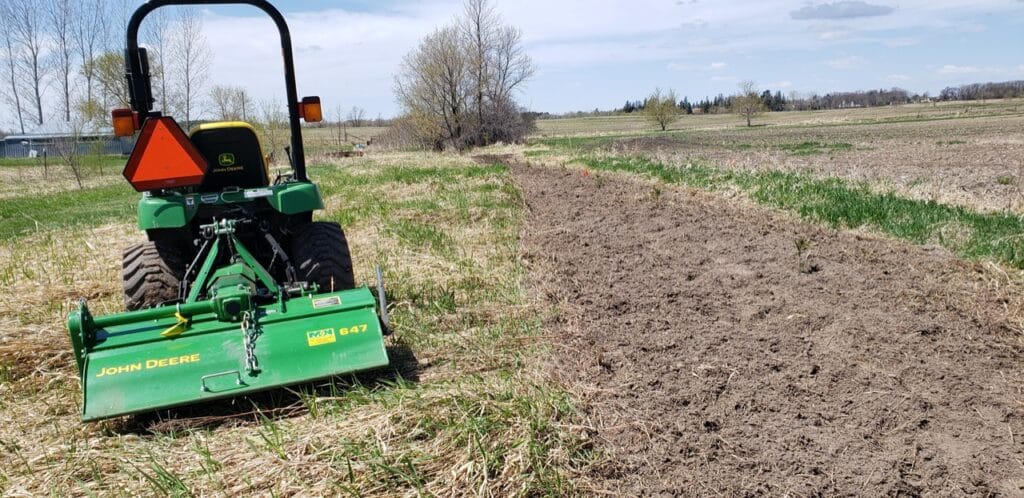
Equipment with implements adds even more weight. Frequent traffic zones—the path from shed to field, routes around garden beds—suffer most. Each pass makes it worse.
Signs You’re Dealing with Compaction
Look for water that doesn’t soak in—puddles after rain signal problems. Check for thin, yellowing grass in high-traffic areas despite adequate water and fertilizer. Notice where ground feels hardest or where tire tracks never disappear.
Dig a test hole. If you struggle to penetrate six inches down, compaction is limiting what your soil can support.
Preventing Damage Before It Starts
The easiest fix is prevention. Avoid driving on wet soil—wait a day or two after rain. Use the lightest equipment that can accomplish the task. A walk-behind mower causes far less damage than a 500-pound garden tractor.
Vary your mowing pattern. Don’t take the same route every week. If certain routes are unavoidable, consider designated travel lanes with gravel or pavers to protect soil.
Check tire pressure. Slightly lower pressure distributes weight over a larger area, reducing point pressure on soil.
Fixing Existing Compaction
Once compaction sets in, mechanical aeration is your best solution. Core aeration pulls plugs of soil out, creating channels for air, water, and roots. Do this in fall or spring. For heavily compacted areas, annual aeration might be necessary for several years.
Topdressing with compost after aeration adds organic matter that improves soil structure over time. In extreme cases, subsoiling may be needed to break up deep compaction layers.
Think Long-Term
Soil compaction doesn’t happen overnight, and it doesn’t fix overnight. But small changes in how you use equipment—avoiding wet ground, varying routes, choosing lighter machines when possible—prevent damage from accumulating. Your land will respond with healthier grass, better drainage, and more productive soil.
For Minnesota property owners managing soil health alongside equipment use, Minnesota Equipment offers guidance on equipment selection and usage practices that minimize land impact. Their team understands how different machines affect soil structure and can recommend options that balance productivity with long-term land health.
Ready to protect your soil while getting work done? Talk to equipment specialists who understand the connection between what you drive and what grows—because healthy land starts with smart equipment decisions.